
The best starting point if you want to speak quickly with several people, test your real level and meet varied profiles.
Choose the right format according to your objective
Useful for regularly working on a language with a person, provided you set a clear and balanced framework.
Very useful for structuring grammar, correcting the basics and preparing for conversations, but insufficient if you never speak.
Cafés, libraries, associations, universities and cultural centers can complement the evenings when you are looking for a more targeted context.
Polyglot evenings
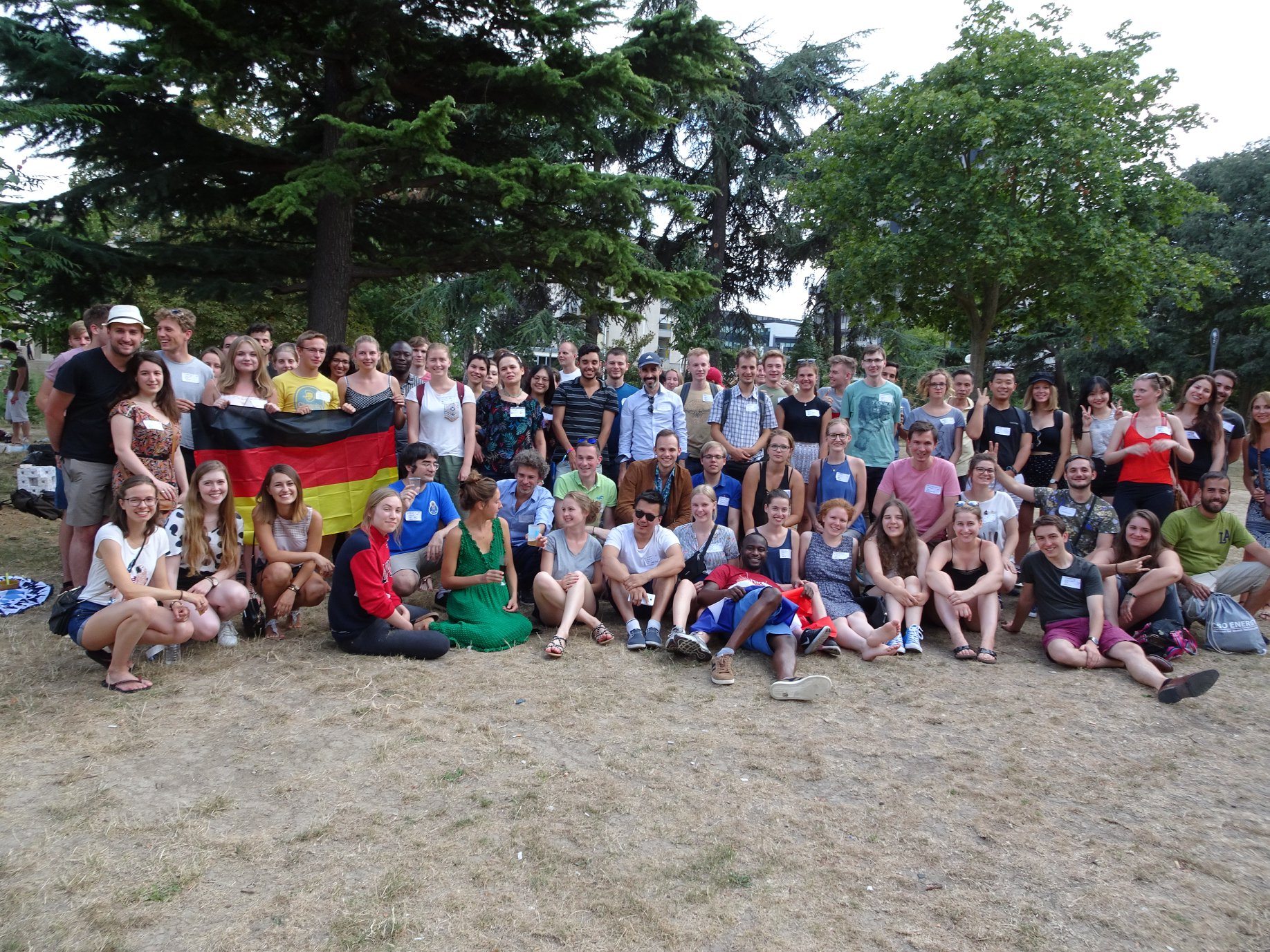
PolyglotClub Paris meetings are designed to transform learning into a real situation. The official PolyglotClub Paris page allows you to check upcoming meetings and register before coming. A successful evening is not one where everyone speaks perfectly, but one where everyone dares to try: ask a question, talk about their day, ask for a correction, explain their country or help someone in French. The format works because it mixes levels, emphases and objectives. You can start with five minutes in one language, move to another table, switch back to French to help someone, then attempt a longer conversation when you are more comfortable.
How to use a polyglot party
Start with the language you want to practice the most, then change tables if the conversation slows down or you want to vary the accents.
Simply announce the language you want to practice. Badges are used to avoid misunderstandings and to quickly identify compatible people.
Prepare three simple sentences: who you are, what language you are learning, why you are in Paris. This is often enough to start the exchange.
This is not a fault. Non-native speakers often understand your difficulties, rephrase more slowly, and help you speak more.
“We don’t need to wait for native speakers to learn a language. What makes you progress is talking often with humans, even imperfect ones, even with different accents. The AI can help for five minutes to prepare a sentence, but we quickly get tired of it: at some point, we need a look, a reaction, a presence, a real conversation.”
One-on-one language exchanges
A language exchange works best when the expectations are simple. Don't just look for a native speaker who is available for two hours. Speak with several people, alternate languages, accept accents and also offer your help. In Paris, this diversity is a strength: a beginner in French can help someone in Spanish, an English speaker can practice Italian, and a French speaker can discover Russian or Chinese. The one-on-one exchange becomes really useful when it extends a real meeting or when the two people give each other a clear framework.
Structuring a one-on-one exchange
Decide in advance on a fair tense in each language. Without a framework, the exchange often switches to the most comfortable language.
Choose a concrete theme: work, travel, accommodation, outings, food, light news. Subjects that are too abstract quickly block beginners.
Correct a little but thoroughly: a rephrased sentence, a recurring word, a pronunciation. Too many corrections cut off the conversation.
The tandem is excellent after a multilingual evening: you find someone with whom you have already gotten along.
Meetups, picnics and international groups
Picnics, international groups and outings create longer, more natural conversations than a traditional class. Bars allow you to meet new people quickly; picnics facilitate calm discussions; outings provide a common topic before even looking for what to say. It is often by changing format that we find our rhythm.
Useful places in Paris
Paris offers many possibilities: cafes, bars, libraries, universities, quays, parks, associations and cultural events. The right place depends on your goal: to speak spontaneously, take a class, find a community, or simply hear the language around you.
The Cité Internationale Universitaire de Paris attracts international students, researchers and residents. Useful for locating events, places of life and a very international atmosphere.
General education courses and activities, including languages. Good option to complement the conversation with a regular setting.
Reference for French courses, certifications and cultural activities. Useful for structuring the learning of French.
The Public Information Library offers language self-study resources, practical for working alone between two meetings.
English-speaking library with events, conferences and international community. Useful for hearing and practicing English in a cultural setting.
Courses, exams, library and events around German and German-speaking cultures.
Classes, events and resources around Spanish and Spanish-speaking cultures.
Courses and resources to progress in English, in person or online depending on current offers.
Exhibitions, media library and cultural events in English or linked to Ireland, useful for practicing in a real context.
Place for debates, events and meetings around Europe, interesting for crossing several cultures and languages.
Tips for coming alone and really progressing
Coming alone is normal, and this is even the case for a large number of participants. Arrive at the beginning if you want an easier welcome, ask where the language tables are, show your badge and start with a simple question: where are you from, what language are you learning, how long have you been in Paris? If a table is already started, listen for a minute, smile, then ask a short question. The classic mistake is to wait for someone to take full charge of you; the good reflex is to take a small first step, then change groups if the conversation does not take off.
When to choose PolyglotClub Paris
Choose PolyglotClub Paris if you want to practice quickly, meet several profiles in the same evening and stop putting off speaking at the perfect time. The format is particularly useful if you live in Paris, if you have just arrived, if you are planning a trip, if you want to maintain a language or if you need to regain confidence. To progress effectively, come several times, write down useful words after each conversation and change tables when you feel that the exchange is slowing down. Regularity matters more than duration: an hour of real conversation every week is better than a major project never started.
Simple route to progress in Paris
Come for the first time without too ambitious an objective: understand the format, speak with three people and identify the languages present.
If a conversation goes well, suggest coffee or a 20/20 chat another week to go deeper.
Use courses, books, apps or AI to correct points that come up often in your conversations.
Real progress comes from regular return: same places, new subjects, more ease and less fear of making mistakes.